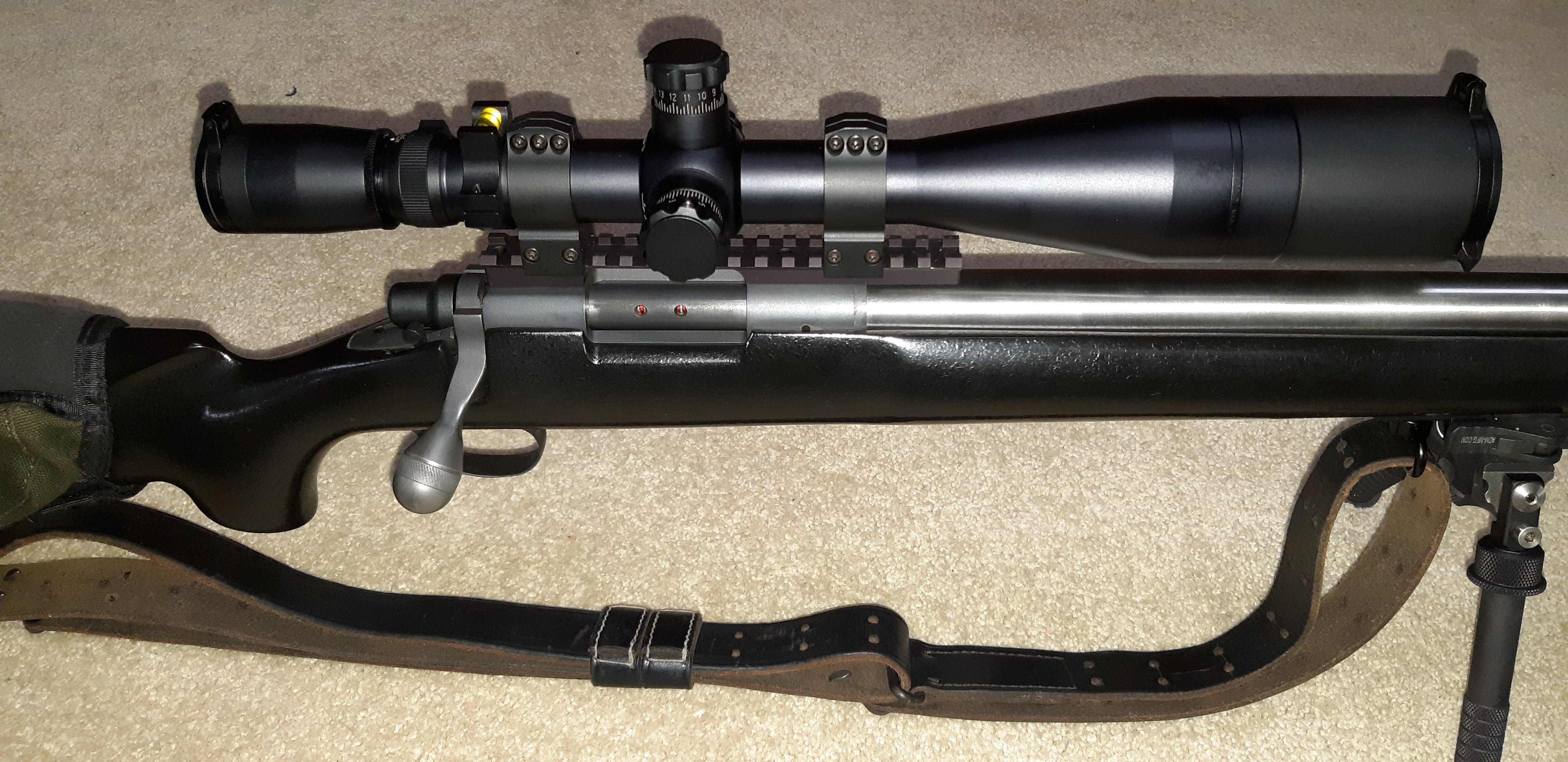
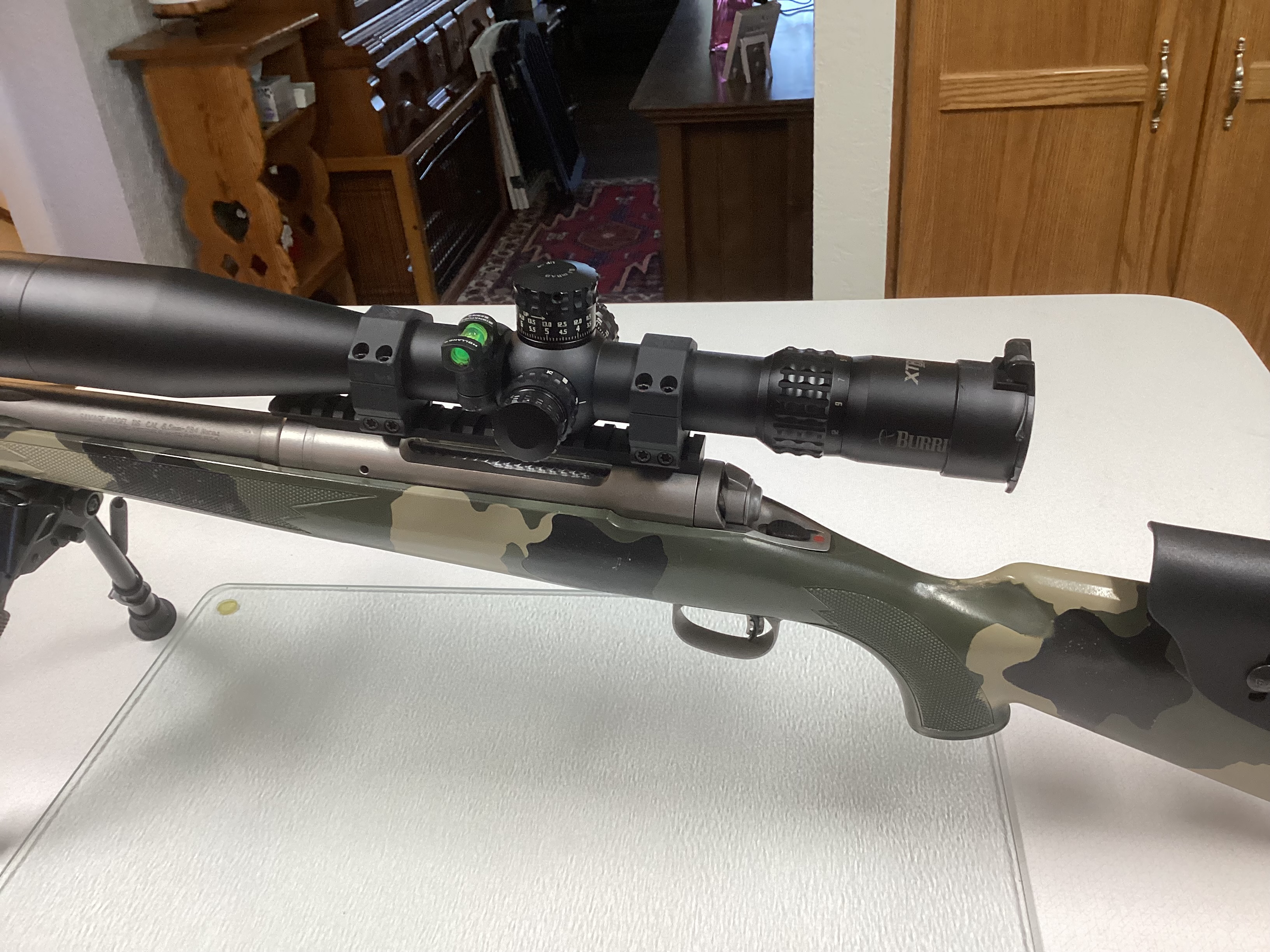
Bubble level?

I kind of like it on the scope, although I've used both at times, just depends on the setup. 🤔 Cheers 🫡

223 Rem LR 2.jpg
 
Rail and scope mounted spirit (bubble) levels have been great for me and my #1 addition to any rifle for anyone shooting accurate at distance.

That said, due to vision issues, I went with a MDT LRA and SG Pulse light levels, I prefer the SG Pulse.
I have the SG Pulse and it works and easy to see in my scan..
 
I hunt in an area where you can put the truck in neutral and swear you're coasting uphill.
Given this, I had to learn about level and what matters about it.

Easily 99% of level merchandising get's it all wrong. The whole thing is a mess.
Biggest issue: What you need to level is not the gun, but POA elevation adjustment.
It needs to be an adjustment purely tied to reticle movement as dialed and/or held off.
Keep in mind with this that most scope reticles, and dials, are not actually plumb to adjustment.
It's on you to test for this and compensate, same as determining your actual click values, which rarely match advertised.

Anyway, to get this right, the level has to be mounted to the scope tube.
Not a cap, rail or ring, they mean nothing.
Once you've set level on a scope, with measure mounted to it's tube, you can move that scope from gun to gun & back, and always shoot plumb.
No other testing/adjustment to that level is ever needed again, for that scope.
The gun itself doesn't matter

Next issue is use.
You can't be moving your eye off the reticle and target, to consider some angled view of a bubble,
There is parallax with this.
You need to be able to view the bubble head on -while fully ready to pull the trigger.
Otherwise, you're not even trying to get this right.

Last is generalizations.
You're shooting off a bipod in the field, with ~30moa dialed in,, how is level not important?
You know, bullets fall plumb.
Is your aim on that plumb line?
I use levels on the tube; I tried on cheap rail mounted one but on flat surface, the bubble wasn't level. Rail mounts would work but obviously you need to ensure your reticle vertical is plumb when the bubble is level.

I use an MDT rail level when I am setting up my scopes. When the rail is level, I rotate the scope to ensure I am bracketing a 20 story building - vertical wire aligns with the side of the building, and the horizontal is aligned with the roof. I double check with a level on the turret - all three have to be alignment. Once the ring screws are tight, I remove the MDT. Since there are not tall buildings within 100 miles of my CO place, I only do this in PHX and only in the early morning before mirage makes it impossible. I have a pole in concrete in CO that is perfectly plumb, but I find the building solution to be much better.

Like you said, once you have a bubble on a scope, you can move it to another rifle without a problem, assuming the rail slots are perfectly flat. Easy to check that with the MDT.
 
I'm about a "half-bubble" off…..so I'm never certain as to what side of the line to put the bubble on! 🤪 memtb
A retired benchrest shooter told me to set the bubble levels up so the edge of the bubble is touching either the left or right line, instead of trying to judge when the bubble is exactly centered in between the lines.
 
Like you said, once you have a bubble on a scope, you can move it to another rifle without a problem, assuming the rail slots are perfectly flat.
When the bubble is mounted & set on the scope tube, plumb POA is no longer dependent on ANY other component.
I don't care about turrets, rings, rails, the action, bedding, stock, bag, or bench for plumb elevation aim.
 
A retired benchrest shooter told me to set the bubble levels up so the edge of the bubble is touching either the left or right line, instead of trying to judge when the bubble is exactly centered in between the lines.
As a competitive Benchrest shooter, I can tell you with certainty that a bubble level is so far down the list it's never even discussed.

In long range BR. tuning is king .. That includes, action timing, ignition tuning, bedding, rings, rails, front and rear bag quality and reading the conditions take center stage.
 
I use levels on the tube; I tried on cheap rail mounted one but on flat surface, the bubble wasn't level. Rail mounts would work but obviously you need to ensure your reticle vertical is plumb when the bubble is level.

I use an MDT rail level when I am setting up my scopes. When the rail is level, I rotate the scope to ensure I am bracketing a 20 story building - vertical wire aligns with the side of the building, and the horizontal is aligned with the roof. I double check with a level on the turret - all three have to be alignment. Once the ring screws are tight, I remove the MDT. Since there are not tall buildings within 100 miles of my CO place, I only do this in PHX and only in the early morning before mirage makes it impossible. I have a pole in concrete in CO that is perfectly plumb, but I find the building solution to be much better.

Like you said, once you have a bubble on a scope, you can move it to another rifle without a problem, assuming the rail slots are perfectly flat. Easy to check that with the MDT.
That goes without saying Rifle level, scope vertial plum to rifle. I believe that the picalinny is mounted to the rifle as being horizonal. So your level mounted the the rail should be level to the rifle. Which should give you the info on whether your rifle is level and plum.
As a competitive Benchrest shooter, I can tell you with certainty that a bubble level is so far down the list it's never even discussed.

In long range BR. tuning is king .. That includes, action timing, ignition tuning, bedding, rings, rails, front and rear bag quality and reading the conditions take center stage.
I feel that if the rifle is set up correctly. It's a no brainer to see if your crosshair are vertial to your rifle. That's what I have gone for in the pass. Like I say I never used one yet, but have 1 or 2, and will try them. That for rifles that I am planning on using in 600 to 900 yards shot on P dog's. Otherwise I never really go beyound 600yds on larger animals. Generally only 500yds to shot.
 
As a competitive Benchrest shooter, I can tell you with certainty that a bubble level is so far down the list it's never even discussed.

In long range BR. tuning is king .. That includes, action timing, ignition tuning, bedding, rings, rails, front and rear bag quality and reading the conditions take center stage.
That was his reply to my question about bubble levels that I asked during one of his seminars on Long Range Hunting & rifle accuracy. IDK if he used them on his benchrest firearms. I have bubble levels on many of my hunting rifles.
 
That was his reply to my question about bubble levels that I asked during one of his seminars on Long Range Hunting & rifle accuracy. IDK if he used them on his benchrest firearms. I have bubble levels on many of my hunting rifles.
I like the scope mounted bubble from MK machine. If I have time, I don't rush to take a truly long range shot at game, I will check the level. Quick and easy. Bubble touching outside line. Not centered between. Works for me.
That's after I've leveled the reticle square and vertical to the action. But is your action square in your stock? Some stocks have a flat area that you can level on. Some do not. Is your retical perfectly square with the scopes adjustment knob that scope mounting levels are sitting on. Some are not. So I make sure the target holder, 3 foot square is level from end to end at the top, put up white butchers paper, and drop a plum line off that and make sure it is square with the top. The horizontal wire sits level on top of target holder. Vertical level is tested against the squared plum line. If something is off, go have a drink and ponder. I could be all wrong, again, but this seems to work ok for me considering!
 

Recent Posts

Back
Top